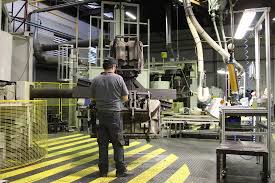
In the manufacturing world, the demand for durable, flexible, and cost-effective production methods is higher than ever. Rotational molding has quickly emerged as a game-changer for industries requiring high-quality plastic parts that are both robust and highly customizable. With its unique ability to combine exceptional durability with versatile design options, rotational molding is providing businesses with a powerful tool for creating products that stand out in both performance and appearance. As industries continue to evolve, Rotational Molding is proving to be an invaluable asset for companies looking to stay ahead of the competition.
What Makes Rotational Molding Stand Out for Durability?
Durability is a critical consideration for manufacturers producing parts intended for harsh environments, heavy-duty use, or exposure to wear and tear. Rotational molding excels in producing plastic parts with exceptional strength and resilience. One of the key factors contributing to the durability of rotationally molded products is the uniform wall thickness achieved during the process. Unlike other manufacturing methods, where wall thickness can be inconsistent, rotational molding ensures an even distribution of material throughout the product, eliminating weak spots.
This consistency in thickness results in parts that can withstand higher levels of stress, impact, and temperature variation, making them ideal for industries like automotive, agriculture, marine, and outdoor equipment. The absence of seams, joints, or weld lines further enhances the durability of the final product. These typically weak points in other manufacturing processes are completely avoided in rotational molding, leading to a stronger, more reliable end product.
How Does Rotational Molding Offer Design Flexibility?
One of the most significant advantages of rotational molding is its exceptional design flexibility. This manufacturing method allows for the production of highly complex and intricate shapes that would be difficult or impossible to achieve with other methods. Rotational molding uses a hollow mold that rotates around two axes while the material inside melts and evenly coats the mold’s surface. This movement allows for the creation of products with varying wall thicknesses, complex internal geometries, and hollow sections without the need for additional assembly.
Moreover, rotational molding can produce products with integrated features such as handles, compartments, and supports, all in one single process. The ability to incorporate multiple design elements into a single part reduces manufacturing time and costs while enhancing the overall functionality of the product. This design flexibility enables companies to produce unique and customized parts that cater to specific customer needs, adding a competitive edge to their product offerings.
Why is Rotational Molding Ideal for Custom Products?
Custom products are becoming increasingly popular as businesses strive to differentiate themselves in a crowded market. Rotational molding offers significant advantages when it comes to creating custom products. The ability to easily modify molds to accommodate different shapes, sizes, and features allows manufacturers to produce bespoke items with relative ease. Whether a business is creating a limited edition product, a specialty part, or an item tailored to a specific application, rotational molding can provide the necessary flexibility to meet these demands.
The customization possibilities are virtually endless. Manufacturers can adjust the material used in the molding process to achieve specific characteristics, such as UV resistance, chemical resistance, or color matching. Additionally, the ability to create intricate internal structures, such as multi-compartment designs or internal ribs, makes rotational molding a go-to solution for products requiring both form and function.
How Does Rotational Molding Help Reduce Manufacturing Costs?
While offering exceptional durability and design flexibility, rotational molding also presents cost-saving benefits for manufacturers. Compared to other molding techniques such as injection molding, the tooling costs for rotational molding are significantly lower. The molds used in rotational molding are simpler and less expensive to produce, reducing the initial investment required for production. This is particularly beneficial for businesses producing smaller production runs or custom products.
Moreover, the material efficiency of rotational molding further reduces costs. The process typically results in minimal waste, as the material is precisely measured for each part. Any excess material can often be recycled, which further helps manufacturers save on material costs. The ability to produce complex parts in a single step also eliminates the need for additional processes like assembly, which saves both time and labor costs. As a result, rotational molding offers a highly cost-effective way to produce durable, high-quality products without breaking the budget.
What Role Does Rotational Molding Play in Sustainability?
Sustainability is a growing concern across industries, and rotational molding is well-suited to support eco-friendly practices. The precision of the material usage in the process ensures that minimal waste is generated, which is a significant advantage in reducing the environmental impact of production. Additionally, the materials used in rotational molding are often recyclable, allowing manufacturers to reuse excess material for future production runs. This circular approach to material use helps promote sustainable manufacturing practices.
Another environmental benefit of rotational molding is the lightweight nature of many products produced by the technique. Lighter products are more cost-effective to transport and consume less energy during logistics, contributing to a reduction in carbon emissions. As companies increasingly focus on reducing their environmental footprint, rotational molding offers a solution that combines both durability and sustainability.
Conclusion
Rotational molding is revolutionizing manufacturing by offering a unique combination of durability, design flexibility, and cost-efficiency. Its ability to produce robust, seamless plastic parts with consistent thickness makes it an ideal choice for industries that require long-lasting performance, such as automotive, agriculture, and outdoor products. The versatility of the process also allows manufacturers to create highly customized products with intricate shapes and internal structures, offering unmatched design flexibility. Additionally, the low tooling costs and minimal material waste make rotational molding a highly cost-effective solution for both large-scale and custom production runs.
As businesses continue to demand innovative solutions that offer both high-quality products and economic advantages, rotational molding is positioned to be a game-changer in the world of manufacturing. With its emphasis on durability, design flexibility, and sustainability, rotational molding is set to play a crucial role in shaping the future of product development across industries.