In modern manufacturing and construction, quality is built long before a product reaches the customer. A small crack, a joint that is not as strong as it should be, or a process drift that is not detected can become a major problem down the road. This is why manufacturers today don’t rely on post-manufacture testing. They are developing more effective prevention systems to detect issues at an early stage when they are more manageable.
This change is significant as today’s products and structures are required to operate in more demanding conditions than ever before. The pressure, load, tolerances and production rates are high and leave little margin of error. But the actual “problem” is not only the detection of defects. It is catching them in advance of their formation.
Why Defect Prevention Matters in Engineering
Passing a test at the end is not the only thing engineering quality is. It’s all about ensuring that each step of the production process contributes to the final outcome. Even if the product appears to be good, the quality of the raw material, setting or operator technique can be inadequate. That’s the hard part to do.
Defect prevention can help companies minimize rework, recalling and safeguarding safety and reputation. For industries such as automotive, aerospace, construction, heavy equipment, and more, one failure can impact an entire system. This is why smart manufacturers are investing in methods more than just inspections. They keep an eye on, check and fix throughout the production process.
The Role of Welding Inspection in Structural Reliability
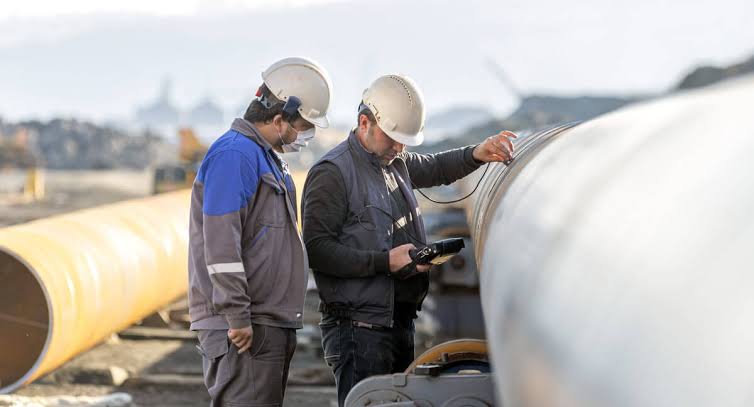
In important assemblies, welds are frequently the means of carrying the load; thus, any imperfection in a weld can be a significant weakness. It is not a simple matter to see cracks, porosity, incomplete fusion and distortion with just a quick glance. Some of these defects are visible while others may be hidden within the joint and only become apparent when the joint is put under stress.
Welding Inspection is where it becomes essential. It provides engineers a systematic method to verify weld quality by visual inspection, non-destructive testing, dimensional inspection and process observation. Rather than waiting for the product to fail, inspectors will be able to determine if the weld is meeting the design intent, material requirements and safety expectations before the product progresses.
Core Techniques Used in Process Verification
Process verification is concerned with ensuring that all the steps in production act as they should. Equipment does not have to work just one time. It must operate day in and day out, shift in and shift out. That’s why modern verification systems are a mix of man and machine.
- The visual and dimensional inspection verifies parts conform to the design and assembly requirements.
- Non-destructive testing is a method that can detect the hidden defects without causing damage.
- Parameter monitoring is the monitoring of the heat, pressure, speed and timing during the production process.
- Tools and machines must be accurate and calibration control ensures that they remain so over time.
- The operator validation verifies the training and qualifications of workers on each process.
These methods when used in combination provide a more robust view of process health. This will make it much easier to catch the drift early on and prevent it from becoming a repeat fault.
How Verification Systems Reduce Hidden Risk
Process variation is one of the largest causes of defects to be missed. There is a slight out-of-calibration in the machine. A material batch can exhibit different characteristics. The new operator can repeat the same steps but at a different time/pressure. These may not sound like big problems on their own, but they can compound to cause serious quality problems.
Verification systems can minimize that risk by embedding checkpoints into the workflow. They do not wait until the product is finished to ensure that it is up to standard; they check that each stage of production is up to standard. This will enable the team to react if the object begins to move out of the range. This is a much more preferable option than finding out the problem after delivery.
Challenges in Preventing Engineering Defects
Defect prevention is not easy, even with the use of advanced tools. A problem is that manufacturing procedures are not usually isolated. Changes in the type of material used can impact the performance of the weld. The strength of a joint can be altered by changing the setting on the machine. Curing, bonding or dimensional stability can be impacted by a change in environmental conditions.
One of the difficulties is speed. But many factories are looking for increased output in a shorter period of time, and it can be tempting to cut corners on checks or documentation. This is typically the point where problems start. It takes discipline to do real prevention. It needs to be consistent, have trained personnel, and systems that do not fail if production is busy.
Why Strong Quality Systems Matter More Than Ever
More is expected now from customers and regulators. Their preference is for products that are safe, consistent and traceable. They also wish to see evidence of proper quality management from the beginning, rather than adding it on afterwards. The expectation has driven manufacturers to consider prevention rather than correction in a more strategic manner.
This is where a good Manufacturing process audit really shines through! It can assist companies in identifying if procedures are being adhered to, controls are effective, and weaknesses are being identified in regular procedures. In other other words, it relates the technical aspects of the production with the practical aspect of quality management.
Conclusion
Preventing engineering defects is best done by incorporating quality into the process, not at the end. Proper weld testing, proper machine settings and early control of variation lead to better, safer, more reliable products. This is the kind of industry that is required, and, indeed, should be expected.
By following a systematic process in Welding Inspection and process verification, manufacturers have a much higher probability of detecting problems early on before they can propagate. It works well in tandem with a regular Manufacturing process audit to lower failure rates, stabilize products and provide engineering work that’s going to withstand in the real world.